MICHIGAN WINDOW TINT RESOURCE

Michigan Window Tint Laws

Michigan’s window-tint rules are governed primarily by MCL 257.709. Unlike many states, Michigan does not use a simple universal darkness percentage for all front-side windows. Instead, the law focuses heavily on where film may be installed and how reflective it may be.

For most drivers, the biggest distinction is between the windshield/front-side windows and the rear portion of the vehicle.

Quick Rule

Front windshield/front side: limited upper strip under the standard rule.

Rear side/rear glass: broader nonreflective tint generally permitted, subject to other requirements.

Michigan Tint Laws at a Glance

Window General Michigan Rule
Windshield Tint may be used along the top edge, generally no more than 4 inches from the top or below the factory shade band, whichever is closer to the top.
Front Side Windows Tint is generally limited to the upper portion of the glass under the standard rule.
Rear Side Windows Nonreflective tint is generally permitted.
Rear Window Nonreflective tint is generally permitted; rear-visibility/mirror requirements may apply.
Reflectivity Highly reflective rear applications are restricted.
Medical Exemption A qualifying medical exception may apply with appropriate documentation.
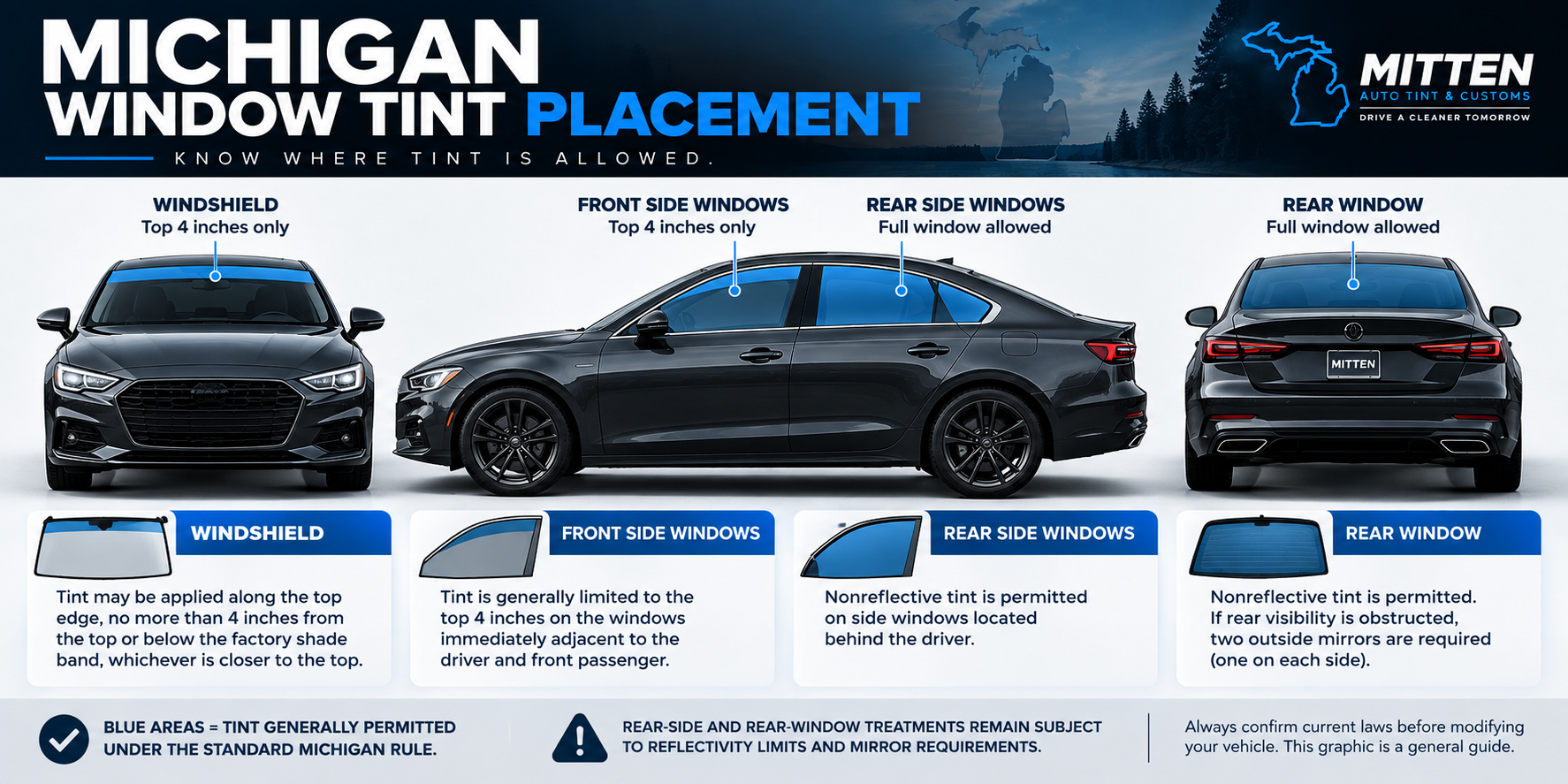
Michigan window tint placement diagram showing legal tint areas by vehicle window

Michigan Tint Placement Diagram

The standard rule is easiest to understand visually: the windshield and front-side windows are far more restricted than the rear-side and rear glass.

Blue-highlighted areas should indicate where tint is generally permitted under the standard rule. Rear applications remain subject to reflectivity and mirror requirements.

Michigan Window Tint Law by Window

Windshield

Standard rule: tint is generally limited to the top strip, approximately 4 inches or the factory shade-band area.

Front Side Windows

Standard rule: tint is generally limited to the upper portion of the glass rather than the full window.

Rear Side Windows

Nonreflective tint is generally permitted on side windows behind the driver.

Rear Window

Nonreflective tint is generally permitted; if rear visibility is obstructed, outside mirror requirements may apply.

Does Michigan Have a Legal Tint Percentage?

Not in the same way many other states do. Michigan’s standard rules focus heavily on where tint may be applied rather than using one universal VLT percentage for all front windows.

This is why a simple statement such as “Michigan is a 35% state” can be misleading without specifying the window location.

Can You Use 5%, 20% or 35% Tint?

The answer depends on the window. Rear-side and rear windows generally allow far more flexibility than the windshield and front-side windows. A percentage should never be discussed without also identifying where the film is being installed.

Michigan Window Tint Reflectivity

Michigan also restricts highly reflective materials on rear-side and rear windows. Darkness and reflectivity are different characteristics: a film can be dark without being highly reflective, and reflective without being extremely dark.

Rear Window Tint and Side Mirrors

If a rear-window treatment obstructs the driver’s view through the rear glass, two outside rearview mirrors—one on each side—may be required so the driver has a clear view behind the vehicle.

Medical Window Tint Exemption in Michigan

Michigan law provides a limited exception when special window treatment is medically necessary for a person who is light-sensitive or photosensitive. Appropriate medical documentation is required, and the treatment still cannot obstruct the driver’s clear view of the roadway.

Drivers relying on a medical exemption should keep the required documentation with the vehicle and confirm current state requirements before installation.

Factory Privacy Glass vs. Aftermarket Tint

Factory privacy glass is common on the rear windows of SUVs, trucks and crossovers. Adding aftermarket film changes the combined VLT, so the existing glass should be considered before choosing a film percentage.

Does Ceramic Tint Change the Legal Limit?

No. Ceramic tint may provide different heat-rejection and performance characteristics, but the film technology does not override Michigan’s placement rules.

Why Professional Tint Installation Matters

Legal compliance is only one part of selecting window tint. Professional installation also helps with proper placement, consistent appearance, appropriate film selection and vehicle-specific guidance.

Proper Film Placement

Especially important around Michigan’s windshield and front-window restrictions.

Consistent Appearance

Professionally fitted film should align cleanly with the vehicle’s glass and trim.

Appropriate Film Choice

Ceramic, conventional and different VLT levels provide different performance and appearance.

Vehicle-Specific Guidance

Factory privacy glass and existing window characteristics affect the finished result.

Michigan Window Tint Laws FAQ

What is the legal tint percentage in Michigan?

Michigan does not use one simple universal VLT percentage for all front-window applications. The standard rules focus heavily on where film may be installed and how reflective it may be.

Can I tint my front side windows in Michigan?

Under the standard rule, tint on the windows immediately adjacent to the driver and front passenger is generally limited to the upper portion of the glass rather than the entire window.

Can I tint my windshield in Michigan?

Under the standard rule, tint is generally limited to the top strip of the windshield, approximately 4 inches or the factory shade-band area.

Can I have dark tint on the rear windows?

Rear-side and rear windows generally allow nonreflective tint, subject to Michigan’s other requirements including reflectivity and rear-visibility rules.

Does Michigan allow 5% tint?

The answer depends on the window location. Rear windows generally allow more flexibility, while full-window tint on the front side is restricted under the standard rule.

Is 20% tint legal in Michigan?

It depends on where it is installed. Michigan regulates placement as well as other characteristics, so a percentage alone does not determine legality.

Is 35% tint legal in Michigan?

Again, the window location matters. Michigan should not be treated as having one universal 35% front-window rule.

How reflective can window tint be?

Michigan restricts highly reflective rear-side and rear-window applications. Drivers should verify the specific product and current state requirements.

Does Michigan have a medical tint exemption?

Yes. A limited medical exception may apply when appropriate documentation establishes that special treatment is medically necessary.

Do I need two side mirrors with rear window tint?

If rear visibility is obstructed, two outside rearview mirrors may be required so the driver has a clear view behind the vehicle.

Choose Window Tint With Michigan Law in Mind

Mitten Auto Tint & Customs can help you compare tint percentages, film technology and appropriate installation locations for your vehicle.

Legal information disclaimer: This page is provided for general informational purposes. Laws and enforcement interpretations can change. Drivers are responsible for confirming current requirements before modifying their vehicles.

Secret Link