
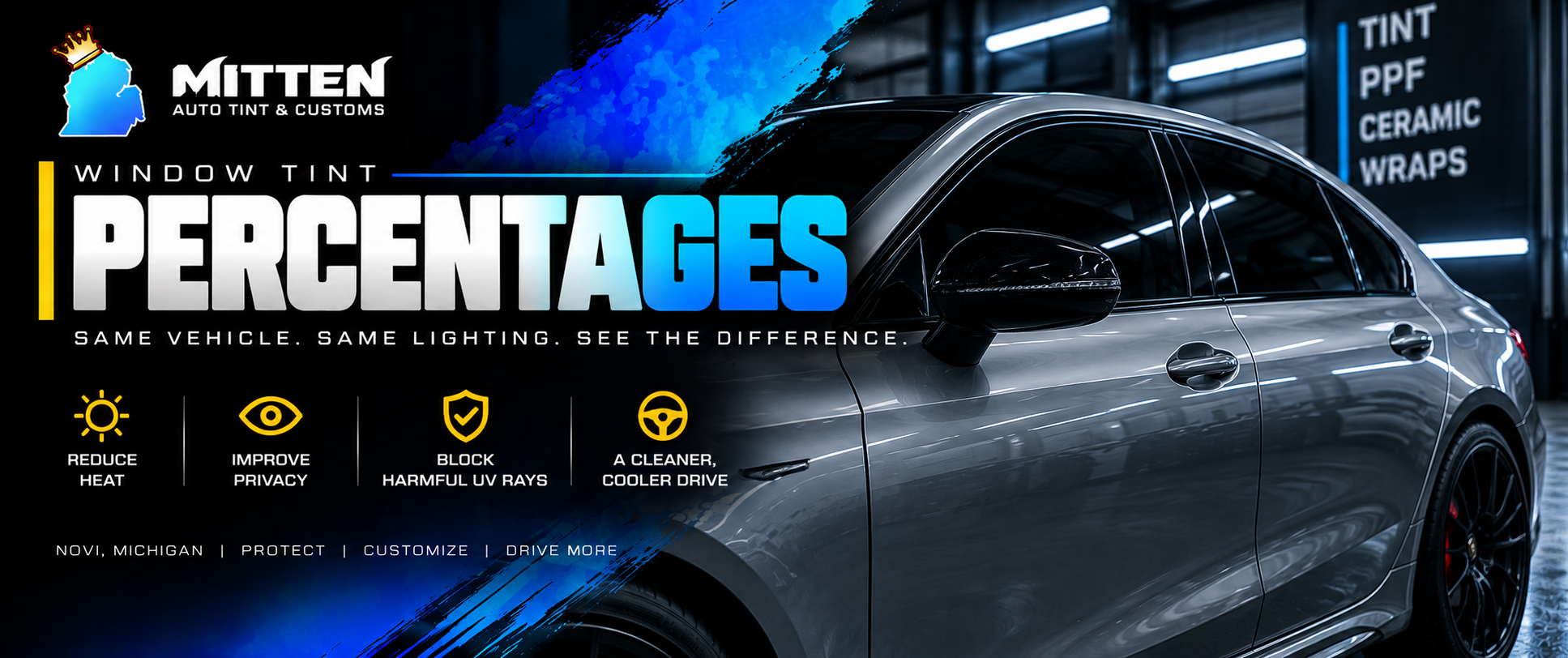
70% • 50% • 35% • 20% • 5%
Window Tint Percentages Explained
Window tint percentages describe how much visible light passes through the glass and film. This measurement is called Visible Light Transmission (VLT). A higher percentage allows more visible light through and looks lighter. A lower percentage allows less visible light through and looks darker.
The percentage refers to light transmission—not the percentage of darkness.
Quick Rule
70% is very light. 50% is light. 35% is moderate. 20% is dark. 5% is very dark.
Window Tint Percentage Comparison
Use this chart as a visual starting point. Actual appearance varies with factory glass, interior color, lighting, vehicle body style and film construction.
| Tint | Appearance | Visible Light Through | Privacy | Outward Visibility |
|---|---|---|---|---|
| 70% | Very light | 70% | Low | Excellent |
| 50% | Light | 50% | Low–Moderate | Very good |
| 35% | Moderate | 35% | Moderate | Good |
| 20% | Dark | 20% | High | Reduced |
| 5% | Very dark | 5% | Very high | Significantly reduced |
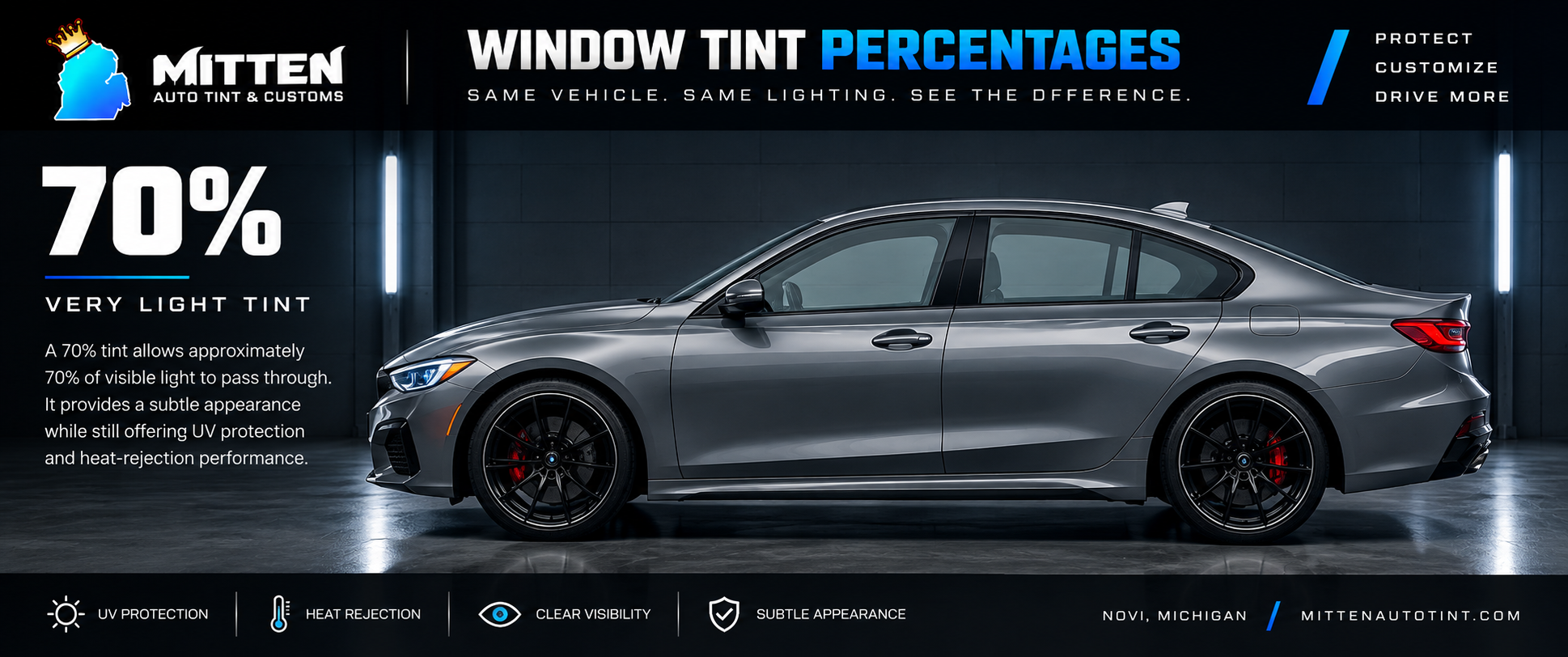
70% Window Tint
Very Light Appearance With Minimal Visual Darkening
A 70% tint allows approximately 70% of visible light to pass through. It may appear nearly clear depending on the factory glass, lighting and film. It can suit drivers who want minimal visual darkening, strong outward visibility and the performance benefits of a higher-quality film.
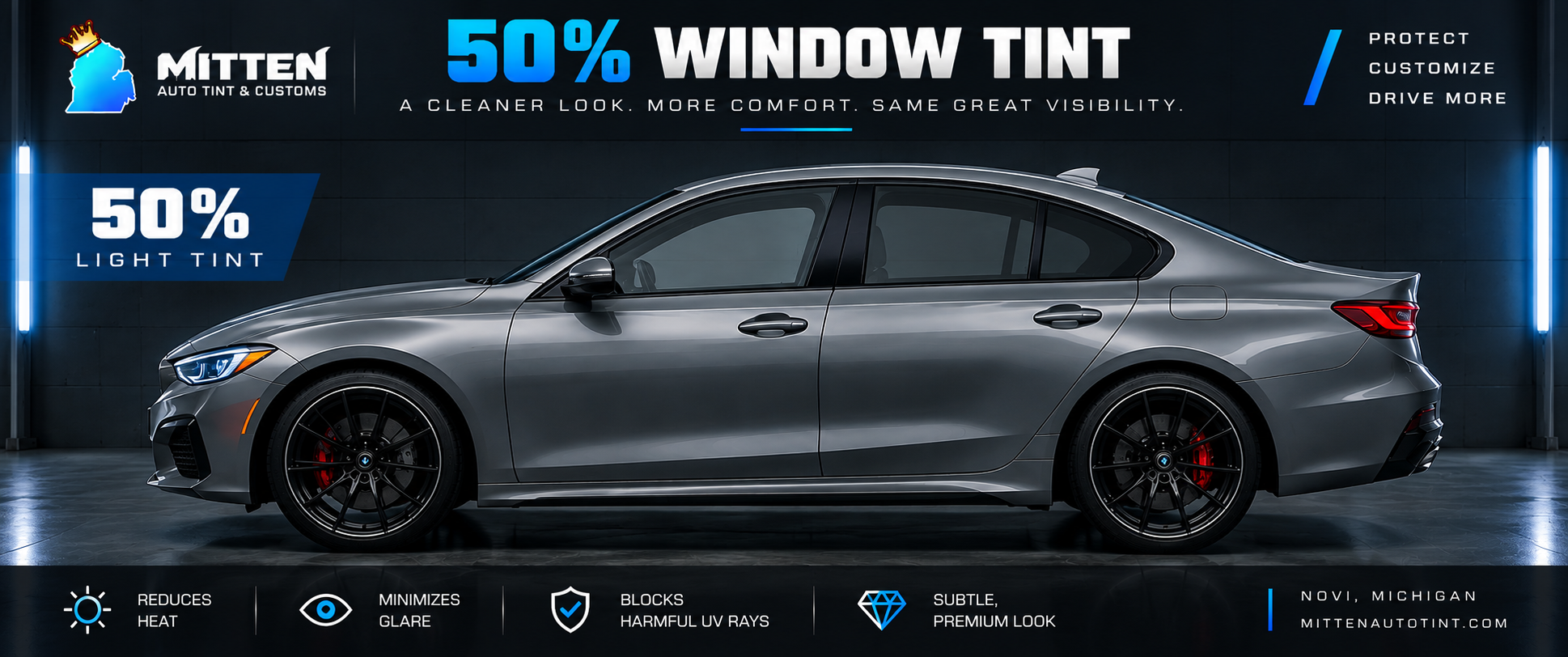
50% Window Tint
Light Tint With a Subtle Finished Appearance
A 50% tint allows approximately half of visible light through. It creates a noticeable but relatively light appearance and can be a strong fit for drivers who want subtle styling, reduced glare and good outward visibility.
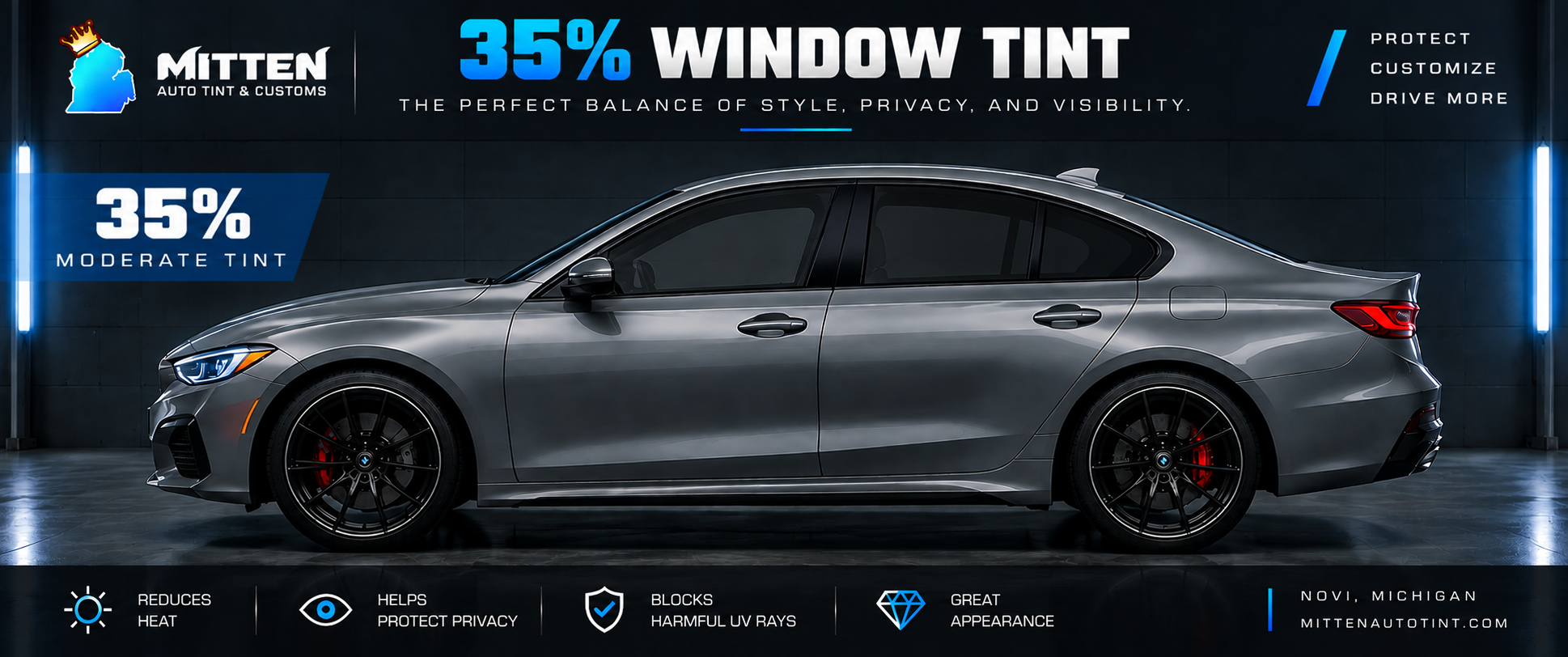
35% Window Tint
A Balance of Appearance, Privacy and Visibility
A 35% tint allows approximately 35% of visible light through. It creates a clearly tinted appearance while retaining substantial outward visibility, making it a useful middle-ground option for many drivers.
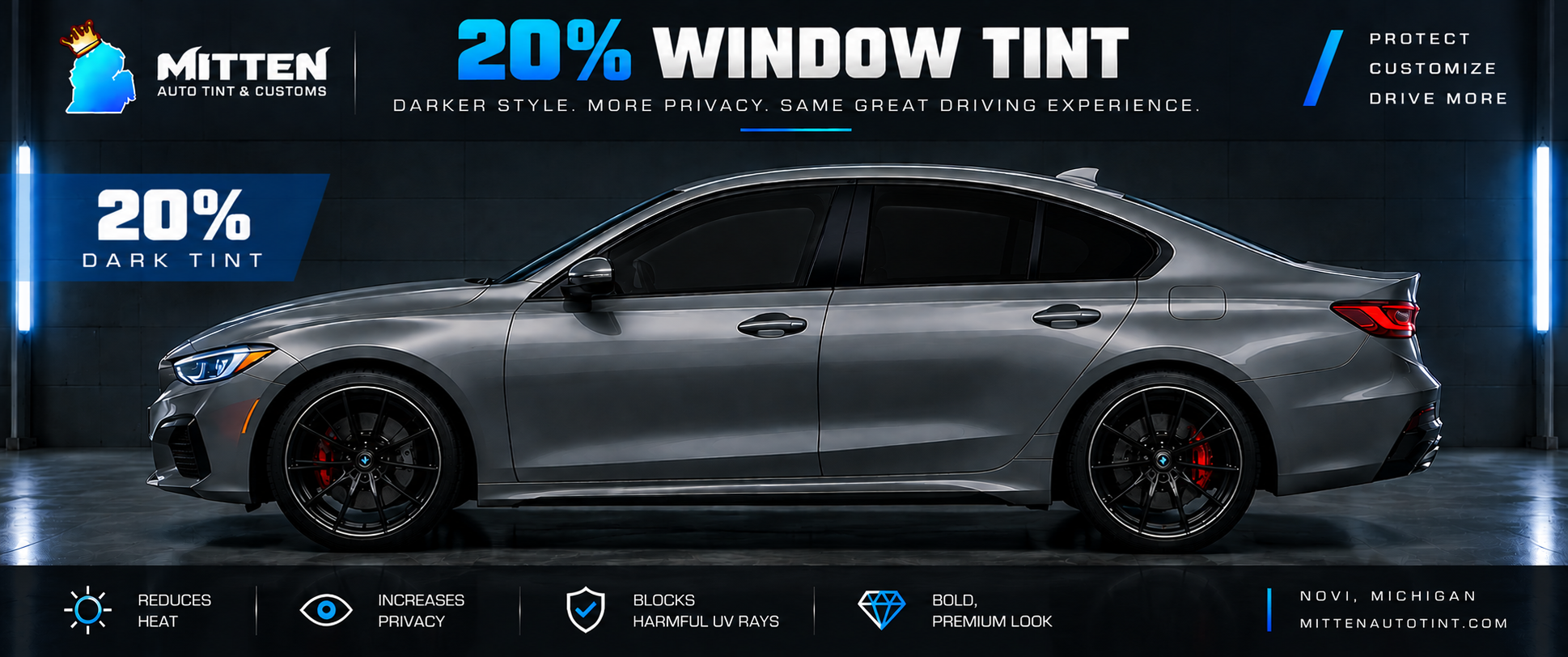
20% Window Tint
Dark Appearance With Increased Privacy
A 20% tint allows approximately 20% of visible light through. It appears substantially darker than 35% or 50% and offers greater privacy. As VLT drops, nighttime visibility becomes a more important consideration.
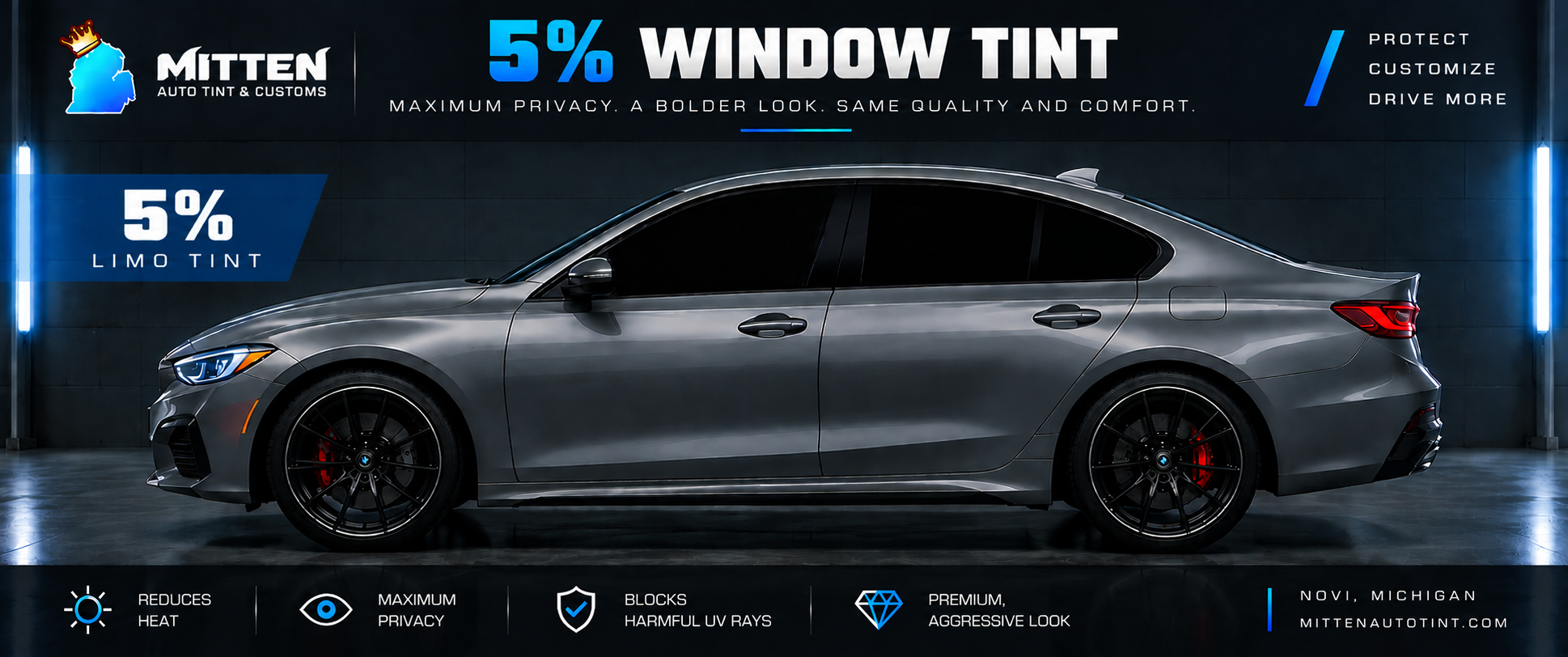
5% Window Tint
Very Dark — Commonly Called Limo Tint
A 5% tint allows only approximately 5% of visible light through. It creates a very dark appearance and very high privacy, but it can significantly reduce visibility through the glass, especially at night or in poorly lit areas.
Does Darker Tint Mean Better Heat Rejection?
Not necessarily. Tint darkness and heat-rejection performance are not the same thing. A darker film blocks more visible light, but modern film technology can provide meaningful heat rejection without requiring extremely dark glass.
A premium lighter film may outperform a darker basic film for heat management. The better way to choose is to consider film technology + performance + desired appearance, not darkness alone.
Which Window Tint Percentage Is Best?
There is no single percentage that is right for every driver. Start with the result you want from the tint.
Subtle Appearance
Consider lighter percentages such as 50% or 70%.
Style + Visibility
A moderate shade such as 35% can provide a noticeable tinted appearance while maintaining useful outward visibility.
More Privacy
Darker options such as 20% provide a substantially more private appearance.
Maximum Darkness
5% creates the darkest common appearance shown here, but visibility and legal restrictions become especially important.
Window Tint Percentage vs. Factory Privacy Glass
Some SUVs, trucks and crossovers come from the factory with darker rear glass. Factory privacy glass and aftermarket window film are not necessarily the same thing. Existing glass affects the final VLT when film is installed over it.
Can You Combine Factory Glass and Window Tint?
Yes. The final VLT is determined by the combined effect of the existing glass and the film. This means the finished result can be darker than the film's standalone rating. A professional installer may measure the existing glass before recommending a film.
What Window Tint Percentage Is Legal in Michigan?
Michigan window-tint rules depend on factors including which window is being tinted and the type of vehicle. Because legal limits are a separate topic from choosing how dark you want your tint to look, use our dedicated Michigan tint-law resource for the regulatory details.
How to Choose Your Window Tint
Before choosing a percentage, consider four things.
Appearance
How dark do you want the vehicle to look?
Privacy
How important is limiting visibility into the cabin?
Visibility
How comfortable are you looking through darker glass, especially at night?
Performance
Are heat rejection, glare reduction and UV protection more important than simply making the windows darker?
Window Tint Percentages FAQ
What does 20% window tint mean?
A 20% VLT film allows approximately 20% of visible light to pass through. Lower percentages correspond to darker-looking glass.
Is 5% tint darker than 20%?
Yes. A 5% tint allows less visible light through than 20%, so it appears considerably darker.
Is 35% tint dark?
35% is generally a moderate tint compared with common lighter and darker options. Its actual appearance varies with the vehicle and lighting conditions.
Is 50% window tint noticeable?
Yes, but it generally creates a much subtler appearance than 35%, 20% or 5%.
Does 70% tint look clear?
It can appear nearly clear in many conditions, although the final appearance depends on the film and existing automotive glass.
Does darker tint block more heat?
Not necessarily. Visible-light transmission and heat rejection measure different characteristics. Film technology can have a major effect on heat-rejection performance.
Does factory tint affect the final percentage?
Yes. Existing factory glass affects total visible-light transmission when aftermarket film is added.
What percentage should I put on my car?
That depends on your desired appearance, privacy, visibility, performance goals and applicable tint regulations. Mitten can help you compare options for your vehicle.
See Window Tint Options in Person
Photos and percentage charts are useful, but tint can look different depending on the vehicle, interior and lighting. Mitten Auto Tint & Customs can help you compare film options and choose the shade and film technology that best fit your goals.